
Twilight of the Gods: Who Can Keep the Glory Alive?
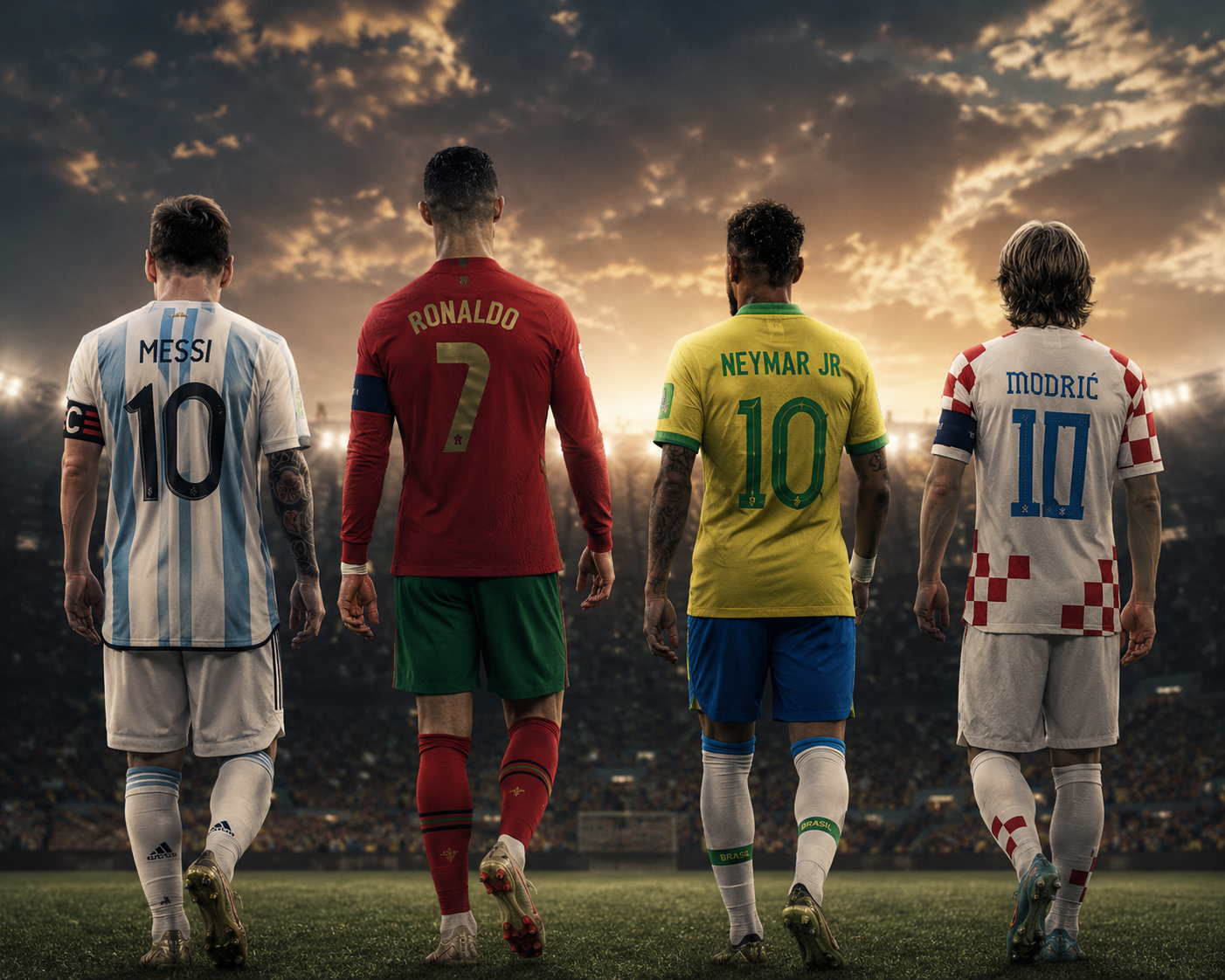
Lionel Messi, Cristiano Ronaldo, Neymar, and Luka Modric are all nearing the end of extraordinary international careers. The question before World Cup 2026 is no longer who was greatest, but who still has the best chance to extend a final chapter.
By June 2026, Lionel Messi, Cristiano Ronaldo, Neymar, and Luka Modric are no longer chasing the same kind of legacy. The first phase is over. Their greatness is established. What remains is the final argument: who can still turn age, mileage, and physical decline into one more meaningful World Cup chapter?
That question cannot be answered only by reputation. It has to be answered through three filters: what each player has already done, what his body now allows, and how much help his national team can realistically provide. On that scale, all four legends still matter, but not in the same way.
Messi enters the tournament with the cleanest football case. FIFA has confirmed that he will appear at a sixth World Cup, a number previously untouched in the men's game, and he arrives as the central figure of the defending champions. His international resume is already complete: World Cup winner in 2022, Copa America champion, Argentina's all-time appearance leader, and Argentina's all-time top scorer. He also comes from a team environment that no longer asks him to do everything. Argentina's structure is mature, emotionally stable, and tactically coherent. For an older superstar, that matters as much as talent.
Physically, Messi is not the all-action force of his Barcelona prime, and it would be unrealistic to expect long stretches of nonstop acceleration at age 38. But he may be the easiest of the four to age gracefully because so much of his value now lives in decision-making, body orientation, timing, and final-ball quality. He does not need to win every sprint to control a match. In a short tournament, that makes him the most sustainable late-career superstar in this group.
Ronaldo's case is more volatile but still formidable. FIFA's Portugal squad announcement states that he will also reach a sixth World Cup, carrying world-record international totals of 226 appearances and 143 goals. His legend is built on ruthless longevity, goals across eras, and an almost unmatched ability to redefine himself. Yet the World Cup remains the one summit he has not reached. Portugal can still give him a platform because the squad has depth, technical quality, and enough creators to feed a penalty-box striker. But Ronaldo's aging curve is less forgiving than Messi's because more of his present-day value depends on finishing moves rather than dictating the rhythm before they happen.
That does not mean he is finished. Quite the opposite: Ronaldo can still decide matches, especially in moments where instinct, movement inside the box, and conviction matter more than volume. The issue is ceiling. Portugal can build a serious run, but Ronaldo now looks more like a player who can punctuate the story with decisive goals than one who can carry the entire narrative on his own.
Neymar remains the most emotionally compelling candidate and the hardest to trust physically. FIFA confirmed his return to Brazil's 2026 World Cup squad under Carlo Ancelotti, but the same reporting around Brazil's preparation has underlined his fragility. Since the serious knee injury he suffered in October 2023, he has spent long periods fighting his way back. FIFA also reported a grade-two calf injury ahead of Brazil's warm-up games, another reminder that his body is still an open question. Of the four players here, Neymar is the one with the widest gap between possible brilliance and medical uncertainty.
At his best, Neymar changes the shape of a tournament. He is Brazil's all-time leading scorer, the most naturally inventive attacker of his generation after Messi, and the kind of player who can bend matches through dribbling, disguise, and improvisation. But the Brazil around him is no longer built as a pure Neymar vehicle. That is good for Brazil, because it reduces dependence; it is less good for Neymar's personal legend, because his influence now depends on whether he can stay healthy enough to own the biggest moments. If he does, the comeback arc would be extraordinary. If he does not, the tournament may move too quickly around him.
Modric represents a different form of greatness. AC Milan confirmed his signing in 2025 and later issued an official medical update in April 2026 after surgery for a complex fracture of the left cheekbone. So even before Croatia's World Cup campaign begins, his body has already demanded another sacrifice. Yet Modric remains one of the strongest symbols of football intelligence aging well. He is the 2018 Ballon d'Or winner, Croatia's appearance record holder, the leader of the side that reached the 2018 final and took third place in 2022, and one of the defining midfielders of the modern era.
The challenge is team context. Croatia are experienced, disciplined, and emotionally hard to break, but they do not arrive with the same margin for error as Argentina, nor the same attacking depth as Portugal or Brazil. Modric can still elevate Croatia's control, poise, and courage. He can still make the game feel smaller for everyone around him. But unlike Messi, he does not have a reigning champion's framework behind him, and unlike Ronaldo, he is not supported by a squad built to overwhelm opponents with individual attacking talent.
So who is most likely to extend the legend?
If the definition is a title-level final chapter, Messi is the strongest answer. He combines the most complete resume, the most stable national-team environment, and the most age-resistant style of the four. He no longer needs to dominate every minute; he only needs to dominate the decisive ones, and Argentina remain strong enough to carry the rest.
If the definition is record-chasing immortality, Ronaldo still has a serious claim. He may not be the likeliest player here to win the tournament, but he is still the likeliest to add one more unforgettable scoring image to football memory.
If the definition is a dramatic resurrection, Neymar owns that category. No one in this group has a wider emotional upside. But his body makes every prediction fragile.
If the definition is noble resistance against time, Modric may be unmatched. A fifth World Cup at 40, after another major injury setback, would already qualify as a final act of unusual dignity.
The most realistic conclusion, though, still points back to Messi. Great late-career tournaments are rarely won by nostalgia alone. They are won by fit between player, role, and team. Right now Messi has the best balance of those three. He is no longer football's youngest god, but among these four fading giants, he still looks like the one most capable of turning twilight into one more burst of light.
- FIFA: World Cup 2026 squads confirmed
- FIFA: Cristiano Ronaldo set for sixth World Cup as Portugal squad named
- FIFA: Neymar returns to Brazil squad for World Cup 2026
- FIFA: Neymar suffers calf injury before Brazil warm-up games
- AC Milan: Official statement on Luka Modric
- AC Milan: Official medical statement on Luka Modric
Discover More
View All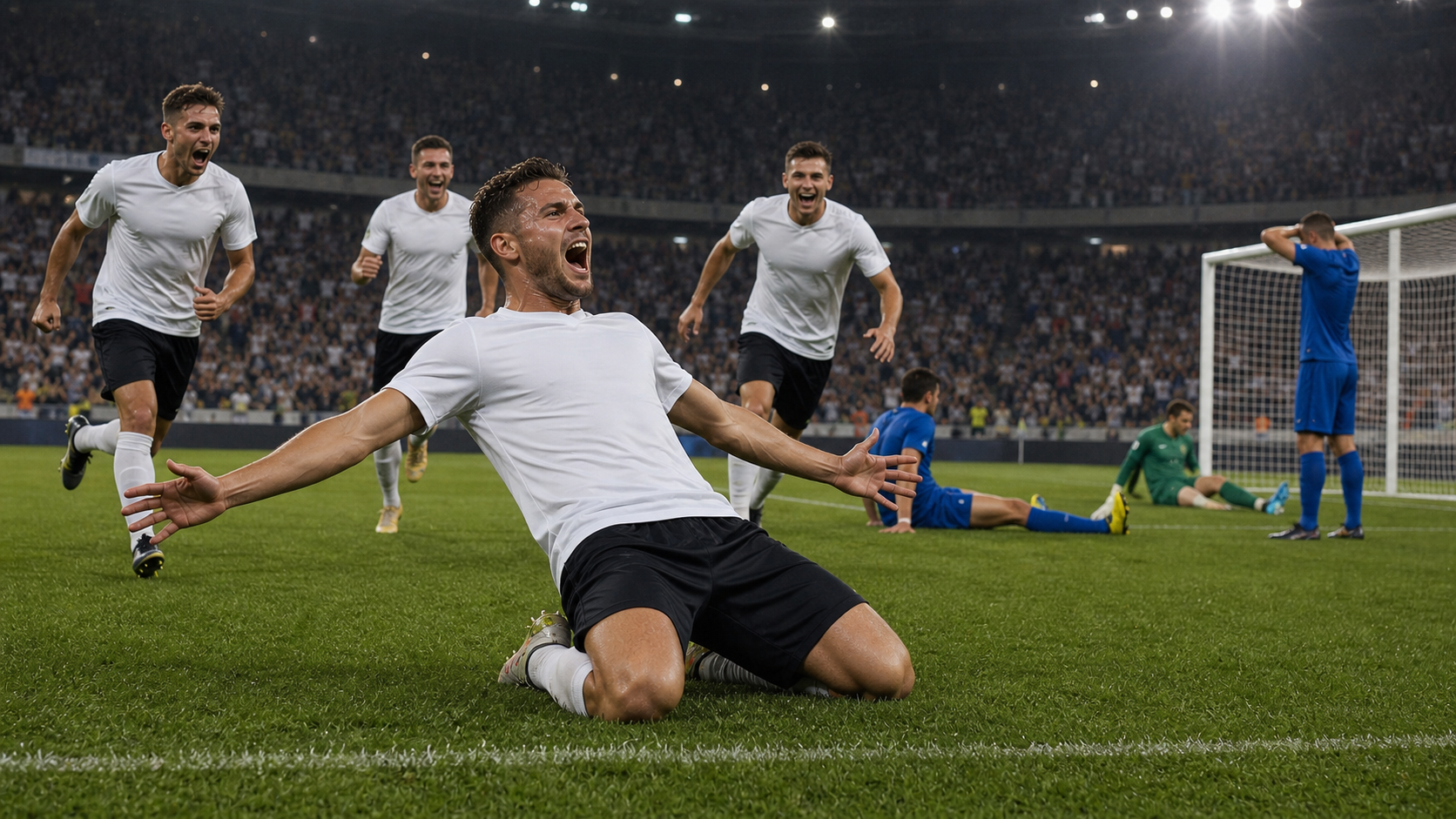
The German Machine Still Has Its Power
Germany opened their 2026 World Cup campaign with a 7-1 win over Curacao, combining high pressing, wide overloads, strong chance creation, and ruthless finishing.
Jun 15, 2026
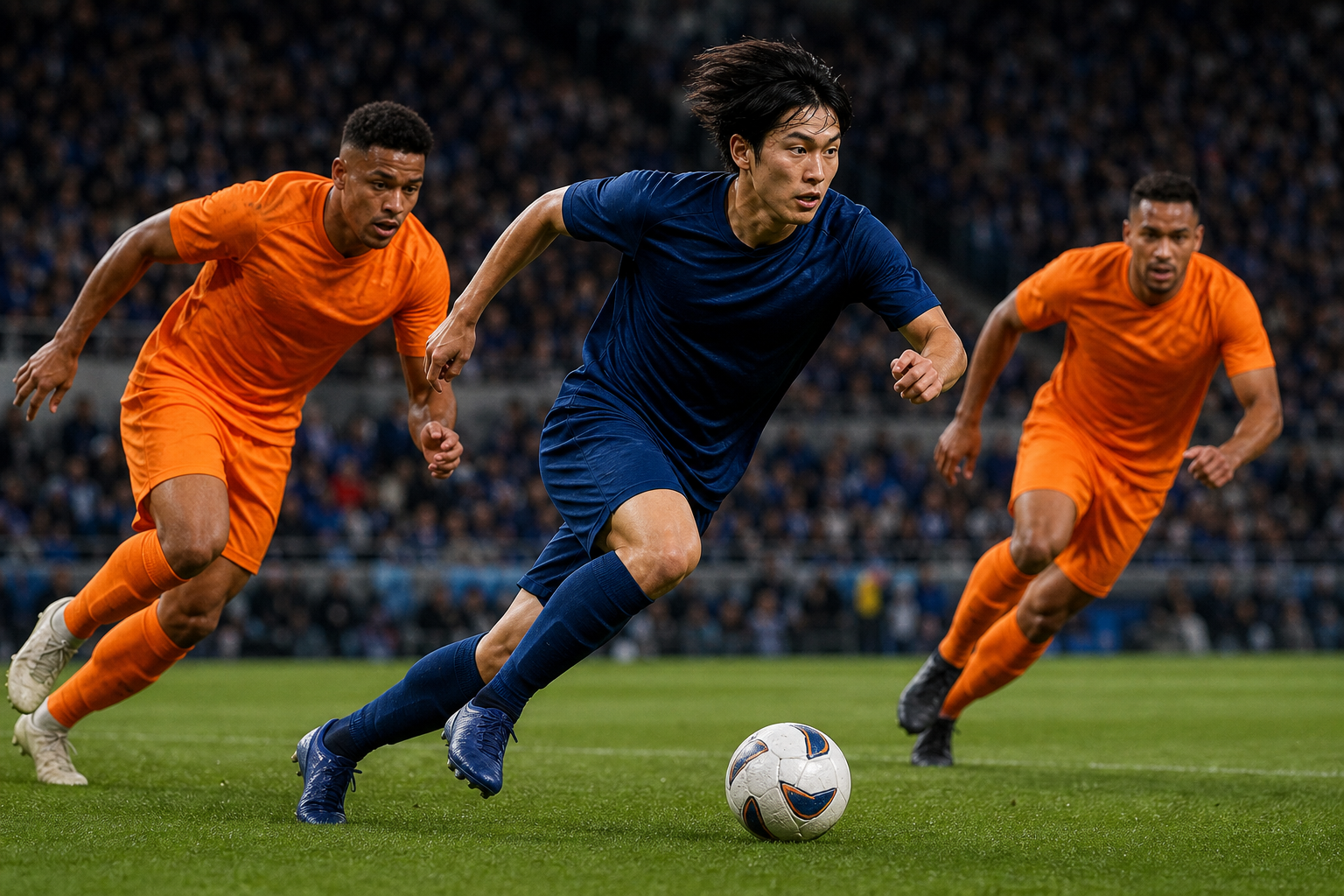
Japan Charge Relentlessly and Look Every Bit as Strong as a European Power
Japan's 2-2 draw with the Netherlands showed why the Samurai Blue can stand toe to toe with elite European opposition, from the pre-match numbers to the transition bursts, score swings, and what comes next.
Jun 15, 2026