
Japan Charge Relentlessly and Look Every Bit as Strong as a European Power
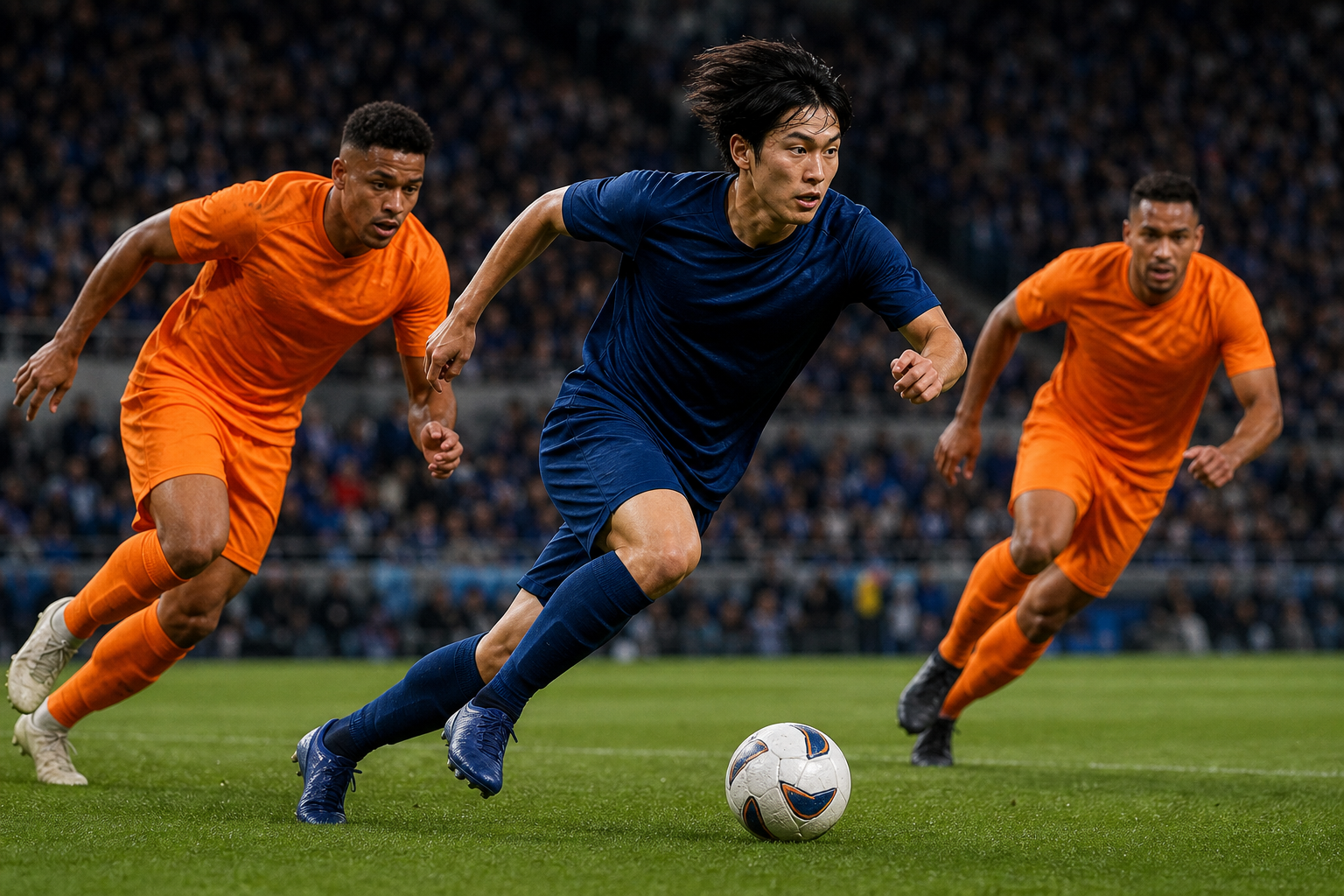
Japan's 2-2 draw with the Netherlands showed why the Samurai Blue can stand toe to toe with elite European opposition, from the pre-match numbers to the transition bursts, score swings, and what comes next.
If one match was supposed to remind the world how far Japan have come, this was it. Japan did not beat the Netherlands in Arlington, but the 2-2 draw still felt like a statement. The score mattered, naturally. The bigger point was the way the Samurai Blue got there: with speed, nerve, tactical discipline, and the kind of transition football that can make even established European powers look unstable.
That is why the central claim holds up after ninety minutes: Japan charged relentlessly, and they looked every bit as strong as a European power.
Before kick-off, the numbers still leaned Dutch. As of the latest official FIFA men's ranking update on 11 June 2026, the Netherlands were ranked eighth and Japan 18th. The betting market reflected that gap as well, with Fox Sports listing the Netherlands as slight moneyline favorites at +105, compared with Japan at +270, with the draw at +250. In other words, Japan were respected, but not expected to control the emotional center of the match.
And yet the warning signs were already there for anyone paying attention. Japan arrived in solid shape. The JFA's recent match reports show a 1-0 win over England at Wembley on 31 March and another 1-0 win over Iceland on 31 May in Tokyo. Those are not empty tune-up results. They point to a team that is comfortable defending compactly, then breaking games open with one fast, clean attacking sequence.
There was also adversity. Captain Wataru Endo withdrew from the World Cup squad days before the opener because of a foot injury, a significant loss in leadership and midfield control. A less mature team might have entered the Netherlands game emotionally flat after that setback. Japan did the opposite. They looked connected, urgent, and convinced.
The first half was cautious on the scoreboard but informative in style. The Dutch had more of the ball, and Japan had to survive a few uncomfortable moments, including an early Zion Suzuki save. What stood out, though, was Japan's patience. They did not chase the game recklessly. They stayed narrow, protected central spaces, and waited for the right moments to run.
The match changed immediately after the break. Virgil van Dijk gave the Netherlands the lead in the 50th minute, attacking the ball well and guiding a header in for 1-0. That could have become the moment when a technically stronger European side settled down and managed the rest of the evening. Instead, it triggered Japan's most impressive stretch.
Seven minutes later, Japan hit back through exactly the kind of move that has become their signature. Takefusa Kubo found Keito Nakamura, and Nakamura turned and rifled his finish past Bart Verbruggen from the left side of the arc. It was not only an equalizer. It was a demonstration of Japan's in-game revival through transition: one sharp pass, one quick turn, one decisive strike, and the Dutch advantage was gone.
The Netherlands went ahead again in the 64th minute through Crysencio Summerville after Ryan Gravenberch's assist, and once more Japan had a choice. They could accept that this was one of those honorable defeats that still gets praised after the final whistle. Or they could keep leaning into the article's core truth and play like a team that no longer sees elite European opposition as a ceiling.
Japan chose the second path. They kept pushing. They kept believing in the next action. In the 88th minute, Daichi Kamada rose to meet Koki Ogawa's corner and forced the ball in for 2-2. It was the reward for persistence, but it was also the reward for personality. Japan did not steal a point by accident. They earned it by refusing to let the game's momentum become Dutch property.
The star performances told the same story. Kubo was the clearest creative spark, giving Japan a player who could receive under pressure and turn one good touch into forward momentum. Nakamura delivered the cleanest attacking moment of the night with his equalizer. Kamada supplied the final emotional punch. Suzuki's early composure in goal also mattered, because games like this often turn on whether the underdog stays alive long enough for its attacking plan to matter.
That is what makes this result more than a draw on paper. Japan did not simply show effort. They showed a version of high-level tournament football that travels well: defensive discipline, transition precision, emotional resilience, and enough technical quality to punish lapses. Those are not outsider traits anymore. Those are the traits of a side that can compete with major teams from Europe on equal terms.
Now the next question becomes just as interesting. According to FIFA's official schedule, Japan face Tunisia in Monterrey on Saturday, 20 June 2026, before closing Group F against Sweden in Arlington on Thursday, 25 June 2026. The Tunisia game is dangerous because it will likely ask a different question. The Netherlands gave Japan space to counter into. Tunisia may offer less space and force Japan to create more against a tighter block. Still, after this performance, Japan should back themselves to edge that match. The most reasonable prediction is a narrow Japan win, something like 1-0 or 2-1, with Kubo and Kamada again central to breaking the game open.
Sweden should be even tougher in a different way. That match looks likely to become a fight over physical duels, set pieces, and second balls, and it may decide qualification or group position. But Japan's draw with the Netherlands changes the tone of that fixture. Instead of entering it as a side hoping to survive, Japan now look like a team that can play for control. If they take care of Tunisia, a draw against Sweden may be enough. If they repeat the same transition sharpness and defensive concentration shown against the Dutch, they have a real chance to finish in the top two.
That is the proper reading of Japan's opener. The result was 2-2, but the message was larger than the scoreline. Japan did not play like plucky challengers. They played like a team that believes it belongs in the same competitive tier as strong European opposition. On this evidence, that belief is not romance. It is football reality.
- FIFA: FIFA/Coca-Cola Men's World Ranking, last official update 11 June 2026
- AP: Daichi Kamada's late header gives Japan a 2-2 draw with the Netherlands in World Cup opener for both
- Fox Sports: Netherlands vs. Japan odds and prediction
- JFA: SAMURAI BLUE win 1-0 at Wembley with Mitoma's decisive counter goal
- JFA: SAMURAI BLUE defeat Iceland 1-0 in final home fixture before FIFA World Cup 2026
- AP: Japan captain Wataru Endo is out of the World Cup and retires from international duty
- FIFA: Tunisia vs Japan match centre
- FIFA: Japan v Sweden preview
Discover More
View All
The German Machine Still Has Its Power
Germany opened their 2026 World Cup campaign with a 7-1 win over Curacao, combining high pressing, wide overloads, strong chance creation, and ruthless finishing.
Jun 15, 2026
Brazil Fail to Win, Qatar Strike Late, Australia Become the Day's Biggest Upset Story
Brazil were held by Morocco, Qatar rescued a late point against Switzerland, Scotland took control in Group C, and Australia produced the clearest upset of the June 14 World Cup matchday.
Jun 14, 2026